
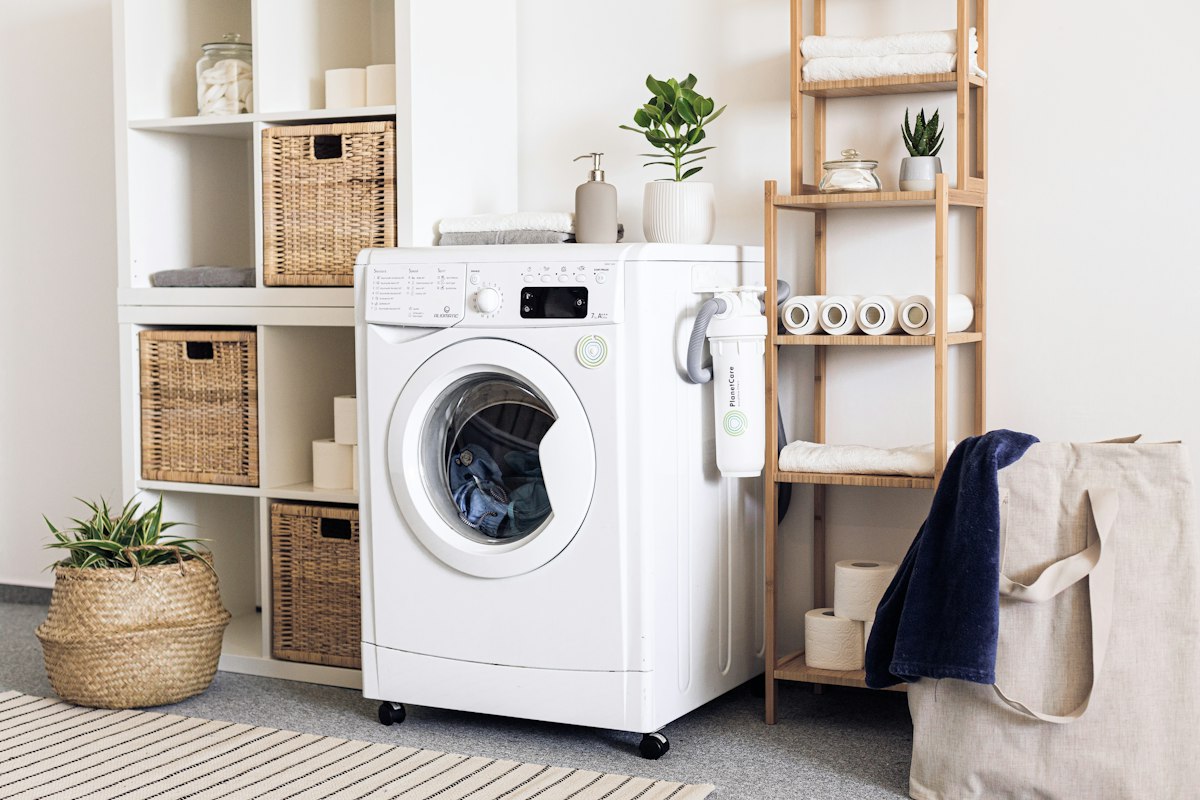
Walking into an appliance showroom and staring at a wall of washing machines can feel overwhelming. The difference between a 3.5-cubic-foot washer and a 5.5-cubic-foot model isn't just price—it's whether you'll do three loads a week or six. Let's break down exactly which size makes sense for your household.
Understanding Washer Capacity
Washing machine capacity is measured in cubic feet, referring to the drum size. A larger drum handles more clothes per load, which means fewer cycles, less water over time, and lower electricity bills from CPS Energy. Here's the general rule: plan on about 1.5 to 2 cubic feet per person in your household, but adjust based on your laundry habits.
A compact 2.3-cubic-foot washer runs around $500-$700 and works fine for singles or couples without kids. Move up to a 4.2-cubic-foot model (around $600-$900), and you've got enough room for a family of three or four. Large families—five or more people, or households with athletes, toddlers, or anyone generating serious laundry—should look at 5.0+ cubic feet, typically $900-$1,400.
Small Households (1-2 People)
If you're living alone or with one other person, a 3.5 to 4.0-cubic-foot washer handles your needs without wasting water or floor space. You'll wash towels, bedding, and a week's worth of clothes comfortably. These mid-size models also fit better in San Antonio's older homes with tighter laundry closets.
Expect to run two to three loads weekly. With SAWS water rates climbing, a quality Energy Star model in this range can save you $40-$60 annually compared to an older inefficient machine.
Medium Families (3-4 People)
This is where the 4.2 to 4.5-cubic-foot range shines. You're looking at four to six loads per week, depending on whether you've got young kids (spoiler: you'll do more laundry). These washers handle king-size comforters without issue, which matters during San Antonio's dusty spring months when everything needs frequent washing.
Front-loaders in this category typically cost $700-$1,000 and use significantly less water than top-loaders. Over a year, that's noticeable on your SAWS bill—potentially $50-$80 in savings.
Large Families (5+ People)
Go big or go crazy doing laundry every single day. Families with five or more people need 5.0 to 5.8 cubic feet minimum. Yes, these washers cost more upfront—$1,000 to $1,600—but you're cutting your weekly loads nearly in half compared to a smaller machine.
If you're washing sports uniforms, work clothes, and bedding for a full house, the time and utility savings pay for themselves within two to three years. The key is buying a reliable brand that won't need $300 repairs every 18 months.
Don't Forget Your Space and Budget
Measure your laundry area before you fall in love with a machine. You need clearance for doors (front-loaders) or lids (top-loaders), plus ventilation space. And remember—a $400 washer that dies in three years costs more than an $800 machine that runs for twelve.
Finding the right balance between capacity, quality, and price doesn't have to be complicated. Stop by and see our $899 in-stock washer and refrigerator options—we'll show you exactly what fits your family and your home, with honest advice and no pressure.